
Description
The Supervising EMS Officer is responsible for assuring adequate resources are available for on-duty crews, facilitating transfer requests, managing immediate scheduling needs, acting as the lead ICS officer for smaller incidents, and providing guidance, mentoring, and evaluation to field personnel.
This is a hybrid position with time divided between front line supervision on an ambulance or quick response vehicle and administrative time to perform core duties of this position.
OPERATIONS COORDINATION
In addition to the essential functions above, this supervising officer acts as the Operations Coordinator with the following additional responsibilities:
1. Logistics oversight of the following areas and Coordinators:
-
- Clinical Supply
- Uniforms
- Fleet
- Equipment
- Safety
2. Managing the BRS Clinical Schedule with assistance of other Captains & Lieutenants.
3. Managing the BRS Daily Operations Protocols – review, revision, and submission to the Administrative Team.
4. Plan for and manage a team of crew members for:
-
- Special events including the EMS bike team
- Medical wilderness rescue
- Tactical medicine events
5. Manage and ensure BRS operational policies and protocols are evidence informed or using consensus or compliance references commonly accepted workforce management principles, VT State Statues / Rules, VT EMS Office Policies or Protocols, Patient Safety Organization (PSO) alerts or reports, patient satisfaction scores, etc.
OTHER ESSENTIAL FUNCTIONS
SAFETY
1. Safety Culture: The supervising officer will lead by example to ensure that all activities performed while on duty at BRS are done in a manner to ensure the safety of BRS personnel, our patients, and the community. This includes attitudes toward safety such as, but not limited to, vehicle safety, OSHA compliance, scene management, routine facilities maintenance, etc. Measurement methods: Avoidable incidents, hazards remedied, and incidents reported for analysis.
2. Quality Assurance – Readiness: Ensure that in-service vehicles, supplies, controlled substances, and equipment have been thoroughly checked by all BRS personnel. Ensure that all reported discrepancies are corrected timely. Documents and reports discrepancies to the appropriate coordinator and Director of Operations or Executive Director when unable to correct the discrepancies. Measurement methods: Vehicle checklists, controlled substance logs, daily chore logs, etc.
ETHICAL CONDUCT
3. Work Habits - Time Management: The supervising officer will plan and structure time effectively and efficiently. The supervising officer must concentrate effort on the most important priorities in the short and long term. The supervising officer should be able to attend a broad range of activities. Measurement methods: Ability to meet established deadlines, direct observation.
4. Work Attitude: The supervising officer will take the initiative to complete work assignments without prompting; exert maximum effort and serve as a role model for staff; demonstrate persistence during the performance of daily duties; bring a high level of energy to job performance; and maintain an optimistic demeanor during job performance. Measurement methods: Direct observation, team feedback.
5. Acting with Integrity: The supervising officer will understand EMS finance and aim to reduce waste in daily operations; follow all appropriate ethical standards in the workplace; consistently act honestly and display the highest level of integrity; be accountable and accept personal responsibility for her or his own actions and those of subordinates; and understand the importance of ethical behavior in the face of adversity or contrary public opinion. Measurement methods: Direct observation, team feedback.
SERVICE EXCELLENCE
6. Communication: The supervising officer will understand the importance of effective communication with coworkers; active listening and how it promotes effective communication; facilitating discussions with various stakeholders (including coworkers, customers, other emergency responders, healthcare professionals, the public, etc.); developing and maintaining contacts that can be used to assist with job related responsibilities. Measurement methods include direct observation and team feedback.
7. Problem Solving: The supervising officer will use current information to make educated decisions; have a basic understanding of how analytical decisions are made to help ensure clinical and operational excellence; be able to concentrate and use information gathering skills to make immediate coherent decisions; and have basic knowledge of all job functions that he or she oversees. Measurement methods include direct observation and team feedback.
8. Coordination: The supervising officer will act as oversight for one functional area of BRS (see details at the end of this job description).
9. Executing Tasks – Shift Communication: The supervising officer will provide oncoming crews with a briefing and feedback session to communicate any operational considerations, safety bulletins, anticipated hazards on shift (weather, road conditions, etc.), planned events, agency initiatives, (e.g., policy, procedure, news), etc.
10. Executing Tasks – Shift Reporting: The supervising officer will provide the other supervising and managing officers with an electronic daily report including but not limited to: shift briefing and personnel encountered, missed service opportunities (9-1-1 or other transports), assignments assigned to other services, fleet issues, personnel issues, supply issues, safety issues, and scheduled transfers. Measurement method is by submitted reports at the end of shift.
11. Managing Significant Incidents: Responds to multi-patient incidents and serves as the Incident Commander; EMS Branch Director; or most appropriate role depending on the complexity and jurisdiction of the response. Recognizes when to request additional resources (e.g., administrative support, mutual aid, etc.) Measured by direct observation and team feedback
12. Quality Assurance – Documentation: The supervising officer will take the initiative to review patient care documentation for timely entry, completeness, and accuracy on each shift worked. Measured by documented random sampling of shift documentation, and documentation noted to be incomplete by the business office or other QA personnel.
13. Quality Assurance – Retrospective Clinical Review: The supervising officer will assist with routine quality reviews in the electronic patient care report system. Measured by completion of assigned reviews and verified random review by the Managing EMS Officer.
14. Quality Assurance – Concurrent Review: The supervising officer will observe patient care provided by BRS crews to ensure the BRS team achieves clinical and operational service excellence. Measured by shift notes, direct observation, and team feedback.
COMMUNITY FOCUSED
15. Civic Responsibility: The supervising officer will provide communication to community stakeholders, understand the value of giving within the community; understand the balance of success of the organization with that of society and maintains focus on doing what is in the best interest of the patient first and foremost; set a good example for employees and consistently behave in accordance with law and policy; and understand that patient advocacy is important to the organization. Measured by direct observation.
16. Social Knowledge: The supervising officer will understand the importance of cultural diversity; have rudimentary knowledge of cultural relationships and geographical layout within the BRS area including local history; understand various cultural and religious perspectives on ethics and be prepared to act in accordance with beliefs that may differ from their personal perspective; understand the laws and regulations that apply to the daily operation of the organization and ensure that the organization maintains appropriate compliance. Measured by direct observation and team feedback.
PRIDE
17. Work Habits & Attitudes: The supervising officer will take the initiative to complete the job without prompting. Measured by direct observation, team feedback.
18. Motivating Others: The EMS officer will understand the importance of their role as a leader of the organization; and of organizational goals and objectives and ensure all staff members understand the same. Measured by direct observation, team feedback.
19. Developing Others: The supervising EMS officer will understand the importance of maintaining a workplace that supports the adult learner; interpreting organizational and individual data and should use said data to measure workplace performance; effectively assessing those he or she leads in a manner that is open, honest, and supportive; organizational and individual strengths and opportunities. Measured by delegated projects, performance improvement plans, records of conversation, direct observation, and team feedback.
20. Evaluating Others: The supervising EMS officer will understand the importance of trust in an organization and respect opposing viewpoints; provide appropriate feedback to employees in a fair and consistent manner; communicate the reasoning for decisions in a manner that ensures understanding while showing employees a high level of respect; review the actions of employees to verify compliance with acceptable levels of behavior and provide appropriate corrective action or positive feedback. Measured by periodic employee evaluations, performance improvement plans, records of conversation, direct observation, and team feedback.
21. Learning: The supervising officer will demonstrate the importance of developing good learning strategies; maintaining a level of intellectual curiosity; continuous learning; and seeking feedback regarding personal performance to continuously grow. Measured by formal education completed, direct observation, and team feedback.
Requirements
- National Registry of EMTs (NREMT) Paramedic (NRP) certification
- Ability to obtain Vermont Department of Health EMS license as a paramedic.
- AHA ACLS or ARC ALS
- AHA PALS, ARC PALS, or NAEMT EPC
- High school diploma or equivalent
- FEMA IS-300 (must be obtained within 6 months of hire)
- 3 or more of the following professional development credentials:
- Community Paramedic with valid IBSC CP-C or Critical Care Paramedic endorsement with valid UBMC CCEMTP or IBSC FP-C or CCP-C
- IBSC Tactical Paramedic (TP-C) or Wilderness Paramedic (WP-C)
- FEMA IS-400
- EMS supervisor-specific training such as Fitch & Associates Beyond the Streets (BTS), USFA Introduction to Fire and EMS Supervision and Management (Q0426), SafeTech Solutions EMS Leadership Academy, etc.
- NEMSMA Supervising or Managing EMS Officer Credential
- USFA EMS Quality Management (R0158) or Management of EMS (R0150)
- Associate’s or higher-level degree
- Other professional development credentials may be considered upon submission of an application
Length of Service: Minimum of 3 years of experience as an EMS provider. Preferred criteria include 5 or more years of experience as an EMS provider at the ALS level (AEMT, paramedic, or CCP) or 1 or more year of supervisor or assistant supervisor.
Skills: Ability to effectively communicate verbally and in writing. Specifically:
- Ability to utilize word processing and spreadsheet software to prepare letters, memos, and reports.
- Ability to utilize electronic patient care reporting software to generate patient care reports and review routine data.
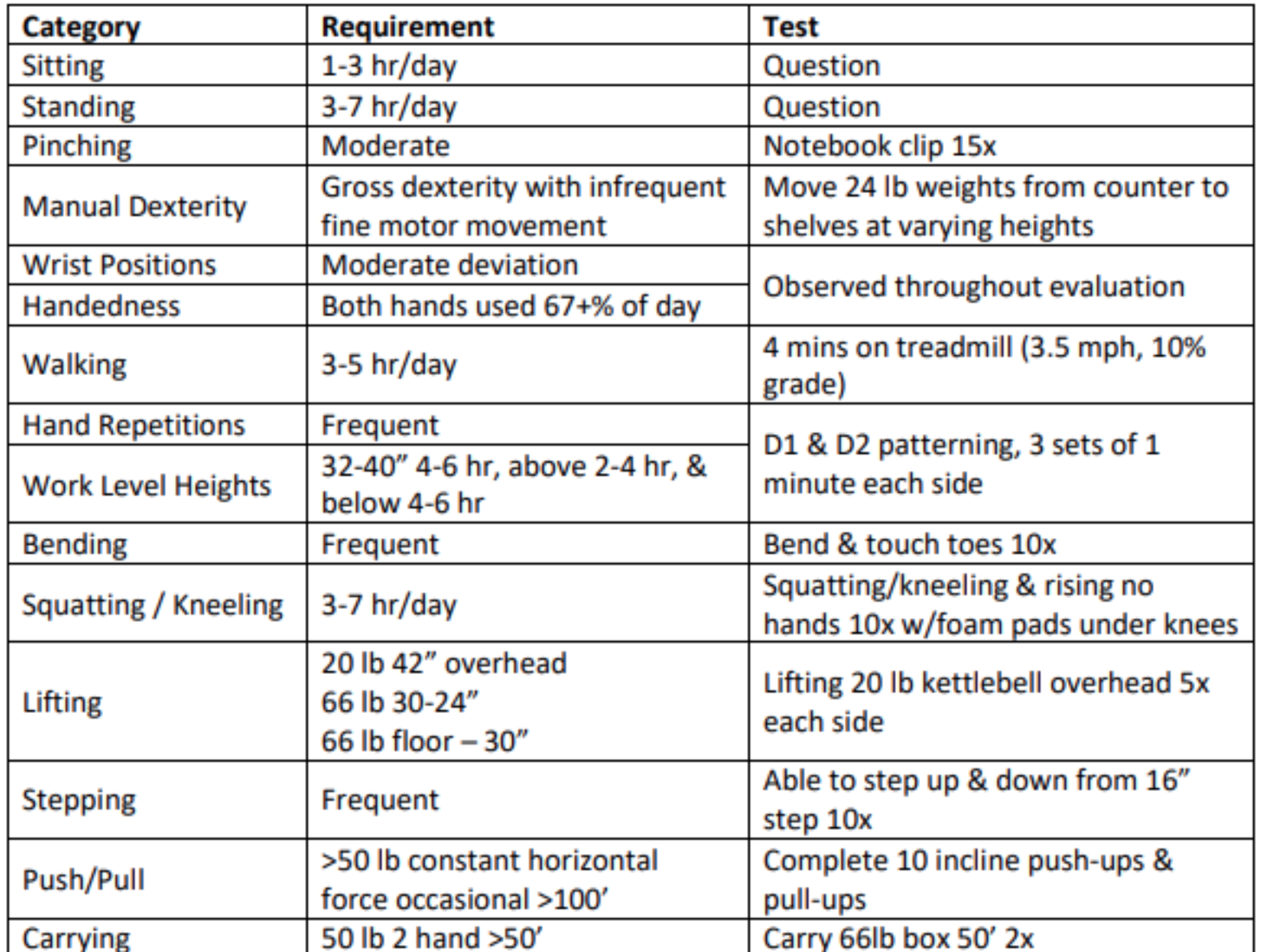
Occupational / Physical Requirements

Save this search
×{Error Message Title}
×Insert additional messaging here.